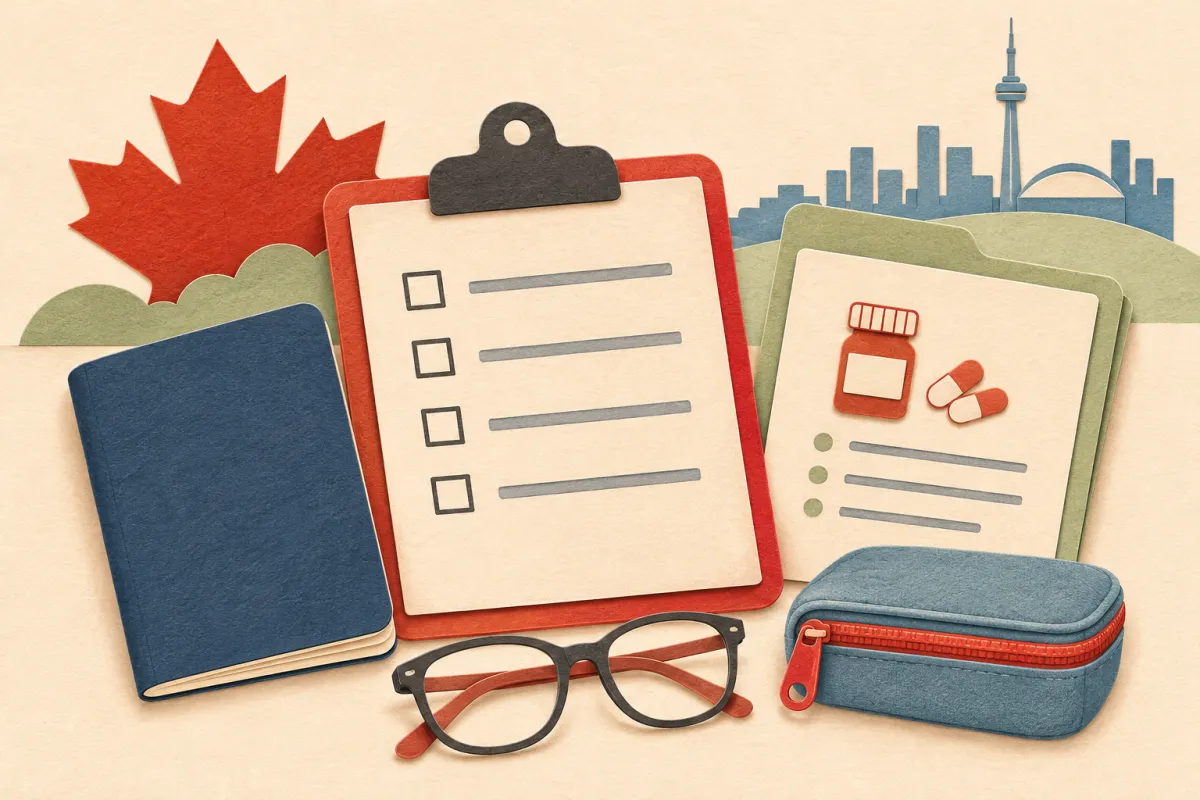
An Appointment-Day Checklist for an Immigration Medical in Ajax
A day-of guide to the small transitions that help you arrive prepared, participate carefully and leave understanding your next step.

The day of an immigration medical involves more than arriving at the right time. You move from home to transport, from reception to the examination and eventually back to your ordinary responsibilities. Small things can be overlooked at those transitions: a passport left in the car, a question forgotten when called or a new instruction folded into a coat pocket.
A useful appointment-day checklist follows those moments. It gives you a way to check what matters without spending the morning rereading every immigration document you own. The goal is to stay organised enough to participate carefully and leave knowing what happens next.
Use this guide for your immigration medical in Ajax alongside the clinic’s instructions. It assumes you have already booked the appropriate examination and prepared the main records. If a requirement remains uncertain, contact the clinic rather than treating a general checklist as a substitute for clarification.
Before breakfast or the usual start of your day
Open the appointment confirmation and check the date, time and full destination. One Stop Immigration Medical is at Suite 403, 300 Rossland Road East, Ajax. Confirm that the appointment is in your calendar in the correct local time zone, particularly if you have recently travelled.
Look for any specific preparation instruction you were given. Follow the actual instruction rather than advice remembered from an unrelated blood test or a friend’s appointment. If you are uncertain about food, medicines or another preparation detail, ask the clinic or the appropriate treating clinician instead of improvising.
Check whether anything has changed since you booked that the clinic should know before you arrive. A practical issue might involve an accompanying person, communication support or a document that could not be obtained. If you feel unwell or have a health concern affecting attendance, contact the clinic for direction rather than making assumptions about what is appropriate.
Take a moment to review the rest of the day’s responsibilities. Confirm who handles school pickup, work coverage or a waiting driver. Knowing that those arrangements are in place makes it easier to focus once you enter the clinic.
The final check at this stage is simple: you know where you are going, what instructions apply today and whom to notify if the schedule changes.
When you close the appointment bag
Check the folder itself rather than assuming the documents are there because you prepared them yesterday. Identification can migrate to a different bag after an errand. An instruction page can remain beside the printer. Open the folder and verify the essentials.
Keep your identification, current medical request or other relevant examination instructions, medication information and requested reports together. Add glasses or contact lenses if you use them and follow the clinic’s own checklist for anything else. IRCC lists the general documents and items to bring in its medical examination guidance.
Put your questions on one small sheet or in a note you can open quickly. Choose the few questions most likely to affect what you do next. You can add a new question during the visit, but a prepared list protects the concerns you already know matter.
Make sure your phone has enough charge for the journey and access to any confirmation stored there. Keep a payment method appropriate to the clinic’s instructions. If someone else is managing payment, confirm the arrangement before leaving rather than assuming staff can resolve it at check-in.
Close the bag securely and decide where the folder will stay throughout the day. A consistent place is easier to remember than moving papers between coat pockets, shopping bags and the car seat.
At the front door and during the journey
Before leaving, check three things in your hand or bag: identification, the appointment folder and your phone or written contact details. This brief physical check is more reliable than repeating a longer list from memory while searching for keys.
If a driver is helping, confirm the destination and the return arrangement. Tell them whether you will update them during the visit or contact them when ready. Keep essential documents with you when you leave the vehicle; the driver may move or leave before you realise something is missing.
If you use public transit, review the current journey and any service notices. Durham Region Transit’s travel planning information is a useful official starting point for local trips. Allow time for the final walk and finding the suite, not just the arrival of the bus or train.
If delayed, contact the clinic as soon as you safely can and explain the realistic situation. Ask how to proceed. Do not assume that a late arrival will automatically fit into the schedule, and do not rush unsafely to protect the original estimate.
During travel, keep confidential documents closed unless you need them. A crowded vehicle or a public waiting area is not an ideal place to read sensitive reports aloud or discuss personal details on speakerphone.
When you reach reception
Check that you are at the correct clinic and let staff know you have arrived. Have identification and the relevant examination instructions accessible. You do not need to place every document on the counter at once; present what staff request and keep the rest organised.
Confirm your name and contact details carefully. Listen to spellings and numbers rather than nodding automatically. If a name differs across documents, explain the difference and show the relevant paperwork instead of hoping it will not matter.
Tell staff about any practical support arrangement already discussed. If a companion is helping with transport only, or you want part of the conversation private, make that clear. A brief explanation can prevent assumptions about who should answer questions or receive information.
If a form is unclear, ask what the question means before completing it. Use accurate information and identify anything you cannot recall. Rushing through paperwork to appear efficient can create a correction that takes longer than the original question would have taken.
Once checked in, return identification and loose papers to the folder unless staff need to retain them temporarily. Keep track of what you have handed over and collect it when returned. The waiting period is a useful moment to review your question list calmly.
During the conversation and examination
Answer the physician’s questions as accurately as you can. If a date is approximate, say so. If you use a medicine whose name is difficult to pronounce, show the list or packaging information you prepared. Clear information is more useful than an answer that sounds confident but is uncertain.
Bring up the relevant reports when they relate to the conversation. Explain what each document is and when it was issued. Avoid handing over an isolated page without context or assuming that a report from another provider has already been reviewed.
Ask for an explanation when you do not understand a step. IRCC’s examination guidance explains that patients can request a chaperone and pause to raise questions or concerns. You can use those options during the appointment, even if you did not anticipate needing them when you booked.
If your companion helps remember details, allow them to support the conversation without losing your own voice. Correct misunderstandings politely and tell staff when you would like to answer privately. The support arrangement should help you communicate accurately.
Before the conversation ends, glance at your written questions. You may find some have already been answered. Ask the remaining important ones, particularly anything that affects travel, another appointment or a document you need to provide afterward.
Whenever a new step is mentioned
A new instruction deserves a short pause. Ask what the action is, who should arrange it and how the result or document should reach the correct office. If a test or appointment is needed elsewhere, confirm the address and booking process rather than relying on a name alone.
Write down preparation instructions exactly as explained, or ask whether written instructions are available. Do not rely on remembering a sequence after several conversations. If the instruction conflicts with something you understood earlier, clarify the difference at the time.
For a document request, identify the report, date range and source. “Bring the specialist letter” can be difficult to act on when you have several letters from different years. A precise request helps you contact the right records office without collecting unnecessary material.
Ask whether there is a deadline and whom to contact if completing the action becomes difficult. Distinguish a clinic’s requested timing from a deadline stated by IRCC. If both exist, keep both in your notes rather than assuming one replaces the other.
Repeat the action back in your own words if that helps: you will contact a named office, obtain the specified report and send it using the confirmed method. This brief check can reveal a misunderstanding before you leave the person who can correct it.
Before you walk out of the building
Make a final document check. Collect identification, reports returned to you, receipts and any examination information sheet or instructions provided. Put new pages in the folder immediately. A paper balanced on top of a phone can easily be forgotten when you put on a coat.
Ask whether anything is currently outstanding from you and how the clinic will communicate afterward. Confirm the contact details if they may change because of travel or a move. A dependable follow-up method matters beyond the time spent in the examination room.
Understand what each document confirms. Attending the appointment, completing the clinic’s work and receiving an immigration decision are separate stages. If you need clarification about a paper’s purpose, ask before using it to make a claim about your application’s status.
IRCC’s medical results status guidance explains how applicants can check results and why an account update may not appear immediately. Keep the official guidance handy instead of assuming the screen must change before you reach home.
Only after the paperwork and next steps are clear should you focus on the return journey. Update your driver or caregiver with the practical information they need and take a moment to confirm the correct pickup point or transit direction.
When you get home or back to work
Put the folder in its usual secure place before starting another task. If a new action was requested, enter it in your calendar or task list with enough detail to complete it. Include the relevant office and the agreed timing, not merely the words “follow up.”
Save digital copies of documents where appropriate and check that the scans are readable. Keep sensitive information out of shared work folders or family messaging threads unless there is a clear reason and suitable permission to share it.
Send any agreed practical update to the person who helped with transport, childcare or work coverage. Then return responsibility for those tasks clearly so nobody remains uncertain about whether you still need assistance.
If a question emerges after the visit, contact the clinic with your appointment details and the specific issue. For future visits, the exam preparation page remains a useful reference. A calm final review turns the day from a collection of appointment moments into a clear record of what you completed and what, if anything, comes next.
Ready to plan your visit?
Our Ajax team can help with appointment details, preparation and questions about your visit.