
Chest X-rays for an Immigration Medical in Ajax: A Patient Guide
Plan the imaging part of your appointment with clear guidance on preparation, pregnancy questions, previous reports and next steps.
When a chest X-ray appears on your immigration medical checklist, the practical questions can arrive quickly. Will you need to change clothes? Is the imaging appointment in a different building? What should you do if you are pregnant, have an old chest report or find standing uncomfortable?
Preparing for a chest X-ray for an immigration medical in Ajax starts with understanding where it fits in the wider appointment. The physician examination, laboratory work and imaging each have their own purpose and paperwork. Knowing which step comes next helps you plan the day without assuming that every part happens in the same room or takes the same amount of time.
At One Stop Immigration Medical, chest X-ray services are available in the same building as our clinic. That can simplify the journey, but it is still worth checking the arrangements for your particular appointment. This guide explains the questions to ask and the information to bring.
Confirm that imaging is required for your examination
IRCC’s standard examination instructions generally call for a chest X-ray from age 11. Particular medical histories or findings can lead to imaging at a younger age. Let the panel team confirm what is required for each applicant rather than treating the age threshold as the only consideration. IRCC panel member guide.
Read your appointment instructions closely. A request to attend a panel physician is different from permission to arrange any imaging test independently. If you are unsure whether a chest X-ray has already been organised, ask the clinic before booking a separate service elsewhere. Explain whether you are attending an initial examination or responding to an additional request.
The same care is useful when a relative is helping you. Give them the actual appointment details rather than asking them to find a place that offers X-rays. Immigration examinations involve specific records, and the clinic can explain how the imaging is connected to your medical file.
Understand the basic procedure without rehearsing every detail
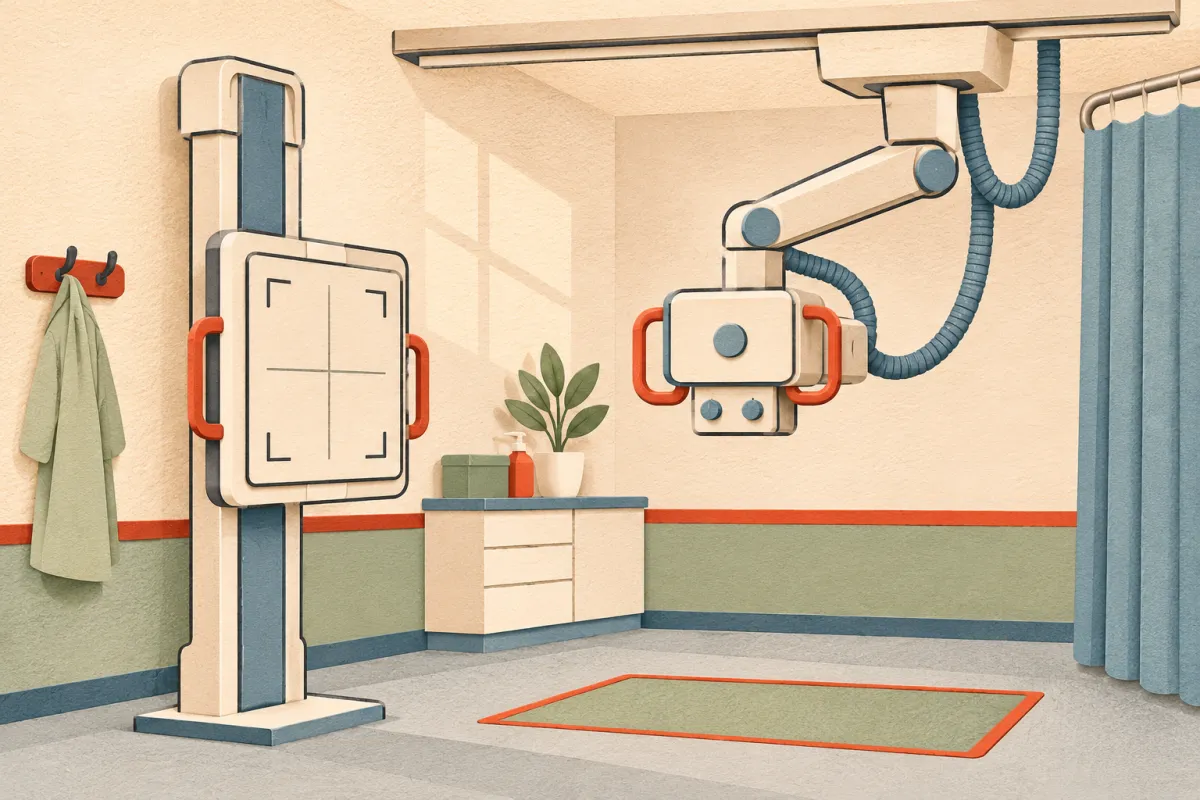
A chest X-ray uses a small amount of ionizing radiation to create images of structures inside the chest. You may be positioned at an image plate and asked to stay still or briefly hold your breath. The technologist explains the position needed for your images. RadiologyInfo chest X-ray guide.
It is reasonable to tell the technologist that this is your first chest X-ray. You can ask where to place your hands, when to move and when to breathe normally again. Trying to anticipate each instruction is usually less useful than listening to the person helping you in the room.
If spoken instructions are difficult to follow because of language or hearing needs, raise that before imaging begins. A simple conversation about how you communicate can be more useful than nodding when something is unclear. Ask the clinic in advance what support can be arranged and whether someone accompanying you should wait nearby.
Choose clothes that make changing straightforward
The imaging team may ask you to remove clothing or jewellery that could interfere with the image and change into a gown. Loose, comfortable clothing and fewer accessories can make this easier. Follow the staff member’s instructions about the items that need to be removed. RadiologyInfo preparation guidance.
Consider the practical details of your outfit before leaving home. Complicated fastenings, several necklaces or valuables that need separate storage can make changing feel more awkward than necessary. A small bag with space for personal items can help you keep track of them. Check that you have everything before leaving the changing area.
Patients sometimes worry about modesty, privacy or needing help with clothing. These are suitable topics to raise when arranging the visit. Explain what would make changing manageable and ask what support is available. An earlier conversation gives staff an opportunity to explain the setup, while leaving the details of the examination to the appropriate team.
Mention mobility needs before appointment day
Standing in a particular position can be difficult for someone with pain, limited movement or balance concerns. Tell the clinic what the difficulty is when booking, and tell the imaging staff again before they position you. Radiology teams can consider different positioning where appropriate; the examination setup depends on the patient’s circumstances. RadiologyInfo chest X-ray procedure.
Be specific about everyday needs. For example, explain whether you use a walker, need help changing or cannot comfortably lift an arm. You do not need to determine the technical solution yourself. The useful contribution is accurate information about what you can and cannot do comfortably.
If a family member will assist you, agree in advance on the help you want. Perhaps they will carry the document folder, manage transport or remain available while you change. Ask the clinic which parts of the visit they may attend. Clear expectations are easier for everyone than deciding these details during a busy check-in.
Pregnancy and possible pregnancy need a direct conversation
Tell the panel physician and imaging team if you are pregnant or might be pregnant before having imaging. Questions about radiation, timing and individual circumstances belong in that conversation. General information online cannot replace a discussion of your situation with the professionals responsible for your care. FDA information on X-rays and pregnancy.
IRCC has a process for applicants who choose to defer a required chest X-ray because of pregnancy. The medical case remains on hold pending completion of the imaging requirement. Ask the panel team to explain the documentation and follow-up arrangements before deciding how to proceed. IRCC instructions for a pregnant client with an X-ray deferral.
Write down the administrative questions as well as the medical ones. Ask who will give you the deferral document, what needs to be shared with your immigration office, how to arrange the later imaging and how to let the clinic know it has been completed. Keep that information with your other application records.
Avoid accepting a blanket assurance that a particular choice is right for every pregnancy. You should have enough information to discuss your options, including the effect of deferral on the medical process. If you are also seeing a maternity care provider, tell the panel physician so that your questions can be considered in the context of your care.
Bring previous chest reports as background information
If you have a previous chest X-ray report or records of a lung condition, place those documents in your medical folder. Add a short note about when and where the previous imaging occurred. Having the dates available is easier than trying to remember them while answering questions during the appointment.
Do not assume that an older image will automatically satisfy the current requirement. Ask the clinic whether it needs the written report, access to the images or any additional records. If you only have a screenshot or a translated summary, explain that rather than presenting it as the complete original report.
This is particularly helpful when records are held by a different clinic or in another country. Start by finding out which information is useful before spending time requesting a large archive. Keep copies of anything you provide and note the method used to send it. A clear record of what has been shared can make later conversations much simpler.
Keep your identification available between appointment steps
IRCC notes that applicants may need to present identification again when attending X-rays or other tests. Keep the original identification accessible even after the first check-in. Being in the same building does not remove the need for each service to confirm who you are. IRCC medical examination guidance.
When you receive imaging paperwork, check the basic details and ask staff about anything that looks unfamiliar. Do not alter clinical forms yourself. If your family is attending together, keep each person’s forms with that person’s identification so documents are not passed to the wrong desk.
Before leaving the clinic area for imaging, confirm exactly where you should go and whether you need to return afterwards. A same-building service is convenient only when the sequence is clear. If someone is waiting to collect you, send an update once you know which steps remain instead of estimating from the time your first appointment began.
Allow time for the full visit, not just the image
The imaging itself is only one part of an appointment that may include registration, changing, positioning and checking the images. Ask for current guidance when making plans around work or childcare. Avoid treating a description of a quick X-ray as a promise about the length of your entire medical visit.
For patients travelling to Ajax from another community, save the clinic’s address as Suite 403, 300 Rossland Road East. Check your route before the day and keep the appointment confirmation available. If you have a tight schedule, explain the constraint when booking so the team can give you a realistic answer about arrangements.
Review the prices page before attending and ask how the imaging charge fits with your examination fee. If you have been asked to complete extra images or a follow-up examination, clarify that separately. Knowing what has been arranged and what has been quoted prevents the word X-ray from standing in for several different services.
Ask what happens after the images are taken
A radiologist interprets chest images and provides a report through the relevant medical team. The person positioning you for the X-ray may therefore be unable to give a clinical interpretation on the spot. Ask the clinic how any follow-up information will be communicated. RadiologyInfo explanation of result review.
Before you leave, find out whether the visit is complete from your perspective or whether you should return to the physician’s reception desk. Keep any documents provided. If you want a copy of a report, ask about the request process rather than assuming it will arrive automatically with appointment paperwork.
When the clinic contacts you later, record the specific next step. You might need to provide a previous report, arrange a discussion or follow instructions for additional testing. Ask who is responsible for making an appointment and how the information will return to your medical file. That is more helpful than trying to infer the reason for a request from its wording alone.
Prepare the questions that matter to you
Your checklist does not have to be long. Confirm that imaging has been arranged, bring identification, choose practical clothing and mention any pregnancy, communication or mobility concerns. Keep earlier reports available and leave enough time to move through the appointment without rushing.
If one detail is still unclear, such as where to go after check-in or how to arrange support, contact our Ajax clinic before your visit. You can also review the exam preparation guide and book an appointment when you have the instructions for your examination. A few clear answers beforehand can make the imaging portion feel much more predictable.
Sources and further reading
Ready to plan your visit?
Our Ajax team can help with appointment details, preparation and questions about your visit.