
Bringing a Service Animal to an Immigration Medical in Ajax
Understand the Ontario framework for service animal access and prepare the practical details of travelling, waiting and participating in an immigration medical.
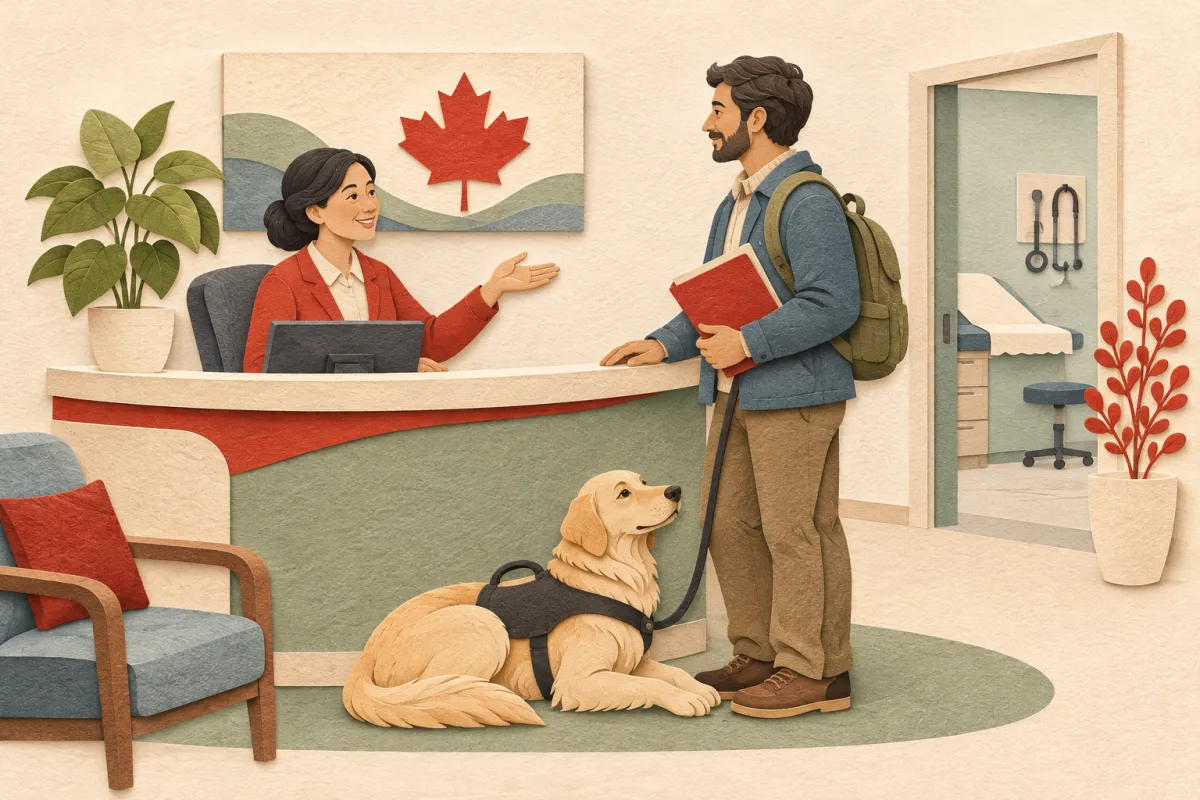
If a service animal supports you in daily life, planning a medical visit should account for that partnership from the beginning. The animal may help with navigation, disability-related tasks or other needs that are not apparent to someone meeting you for the first time. A practical conversation can explain what will make the appointment workable without turning the booking call into a detailed discussion of your diagnosis.
For an immigration medical in Ajax, there are two related questions: what Ontario’s accessibility rules say, and how the particular journey and examination will be organized. Knowing the general framework helps you ask clear questions. Confirming the details helps prevent uncertainty about waiting, moving between rooms and attending any separate testing location.
Start with Ontario’s service animal framework
Ontario says that service animals may accompany people in areas open to the public unless another law excludes them. A service animal may be readily identifiable through indicators such as a harness or vest, or supported by documentation from a regulated health professional confirming a disability-related need. Ontario also states that certificates or identity cards are not required under the AODA and Human Rights Code. Ontario service animal information.
This framework is different from a business’s ordinary pet policy. Do not assume that a notice about pets answers a question about service animal access. If there is confusion, identify that the animal is a service animal and ask to discuss the applicable accessibility arrangement.
The rules do not mean that every possible clinical space has an identical access arrangement. If a provider identifies a restriction, ask for the specific basis and how you will receive the service. Ontario’s guidance says an alternative way to access service must be provided when another law excludes a service animal. Ontario accessible customer service guidance.
Use advance contact to organize the visit
Let the clinic know that you will attend with a service animal and describe any practical information that will help staff prepare. Advance contact is useful for coordination; it should not be confused with a blanket requirement to obtain special permission before accessing a public service area.
You might explain whether you need a particular amount of space beside a seat, whether the animal assists when you move between rooms, or whether another person will accompany you. Keep the description focused on the visit. Staff need to understand relevant arrangements, not receive an unsolicited account of every task the animal performs throughout your day.
Ask who should receive follow-up questions if a testing provider is involved. A single booking conversation may not cover a different organization, so it helps to know where responsibility changes. Write down any agreed arrangement in ordinary language that you can refer to on arrival.
Handle documentation questions carefully
If documentation is relevant under Ontario’s framework, ask what the provider is requesting and why. The provincial guidance refers to documentation from a regulated health professional about the disability-related need. It does not require you to buy an online service animal certificate or registration product to establish access under that framework.
Keep any existing relevant documentation somewhere you can retrieve it if needed. Decide whether paper or a digital copy is easiest to manage alongside your other appointment items. If the document contains additional personal information, ask how it will be reviewed and whether a copy is necessary for the stated purpose.
Do not confuse a service animal documentation question with the immigration medical’s own identification and health information requirements. They serve different purposes. Review the exam preparation page for the documents requested for the medical, and keep them organized separately so a discussion about one does not obscure the other.
Think through the journey with the animal
Plan transport using the arrangements you ordinarily rely on, then check anything specific to this trip. The address is Suite 403, 300 Rossland Road East. Ask about the route from your arrival point to the clinic if that is unfamiliar or creates a practical concern for you and the animal.
Allow enough flexibility to manage the animal’s usual needs before entering and after leaving. Consider how weather, waiting and a possible second location affect the day. Bring the supplies you normally use for an outing of that length without assuming the clinic provides animal care items or a designated relief area.
If a driver or companion is helping, be clear about their role. They may help carry documents or coordinate pickup, but you should decide who handles the animal and when. Avoid leaving that discussion until you are trying to check in, answer questions and manage belongings at the same time.
Explain interaction preferences at reception
Tell staff how you would like them to interact with you and your service animal. They should direct questions about the appointment to you. If attention from other people distracts the animal, a brief explanation can help keep the interaction focused on the medical visit.
Ontario’s business guidance notes that service animals are working animals and that the handler is responsible for their care and supervision. That makes it useful to plan how you will manage the animal during ordinary transitions, such as handing over identification or moving into another room. Ontario customer service guidance.
If the waiting area is crowded, ask where you can position yourself and the animal comfortably while keeping walkways usable. The best arrangement depends on the space and the animal’s role. Do not assume that someone else knows where the animal should sit or whether moving it would interfere with the support it provides.
Discuss the examination before it begins
Ask the clinician to explain any part of the examination that may affect where the animal stays or how you handle it. For example, changing position, moving to another surface or using equipment may require a short conversation. Discuss the practical issue before the step begins so you are not trying to improvise while following clinical instructions.
Explain what support you need if the usual position of the animal has to change. You do not need to provide a demonstration of disability-related tasks for the sake of the booking conversation. The useful information is what allows you to participate safely and understand the plan.
If you also have communication, sensory or mobility needs, describe those directly. The presence of a service animal does not tell staff everything about your preferences. You may still need written instructions, a clear explanation before touch or time to move between locations. The accessible appointment guide can help you identify those additional questions.
Confirm arrangements for separate testing
If the clinic directs you to a laboratory or imaging provider, contact that location about the appointment and service animal arrangements. Explain the specific procedure you have been referred for so the provider can connect you with the appropriate staff. General reception information may not answer a question about a particular clinical room.
If someone says the animal cannot enter an area, ask which area they mean, what rule applies and how your access needs will be met. Avoid assuming that a statement about one room applies to the whole building. Equally, do not improvise an alternative that leaves you without necessary support during a procedure.
Record the agreed arrangement with the testing address and appointment time. If it requires another person to assist, make sure that person understands the task and can attend. A plan that depends on an unconfirmed companion or an unavailable space remains incomplete even if the original booking is confirmed.
Prepare for a disagreement without losing the appointment details
Misunderstandings can occur, particularly when someone applies a pet policy or asks for a type of documentation that does not match Ontario’s guidance. Keep the discussion focused on the service you are trying to access and the specific barrier. Ask to speak with the person responsible for accessibility arrangements if the first conversation does not resolve it.
Make a brief factual note of the date, the request and the response. This can help when you follow up, especially if several organizations are involved. Keep separate any instructions about your immigration medical deadline or required testing so an access discussion does not cause you to lose track of an outstanding task.
For an unresolved concern, use the organization’s accessibility feedback process and consult the relevant Ontario information about rights and complaints. This article provides appointment planning information, not a legal determination about an individual dispute. The applicable facts and any actual restriction need to be considered rather than inferred from a general example.
Keep medical history and animal access distinct
During the health discussion, explain relevant conditions, care and medication accurately. The service animal may be part of how you manage daily activities, but its presence does not replace your medical history or establish an immigration outcome. Ask the physician if you are unsure what information is needed for the examination.
IRCC explains that the panel physician conducts the medical while IRCC makes the final decision about the medical assessment. An access arrangement should therefore be discussed as a way to participate in the required process, without treating it as a prediction about the application. IRCC permanent residence medical information.
Before leaving, check the next steps and confirm how the clinic will contact you. If another visit is needed, ask whether the same arrangements can be used. You can contact One Stop Immigration Medical before booking to discuss the practical details that matter for you and your service animal. A clear plan respects your access needs while keeping the examination, travel and follow-up organized.
Ready to plan your visit?
Our Ajax team can help with appointment details, preparation and questions about your visit.